A topic that tends to get skipped
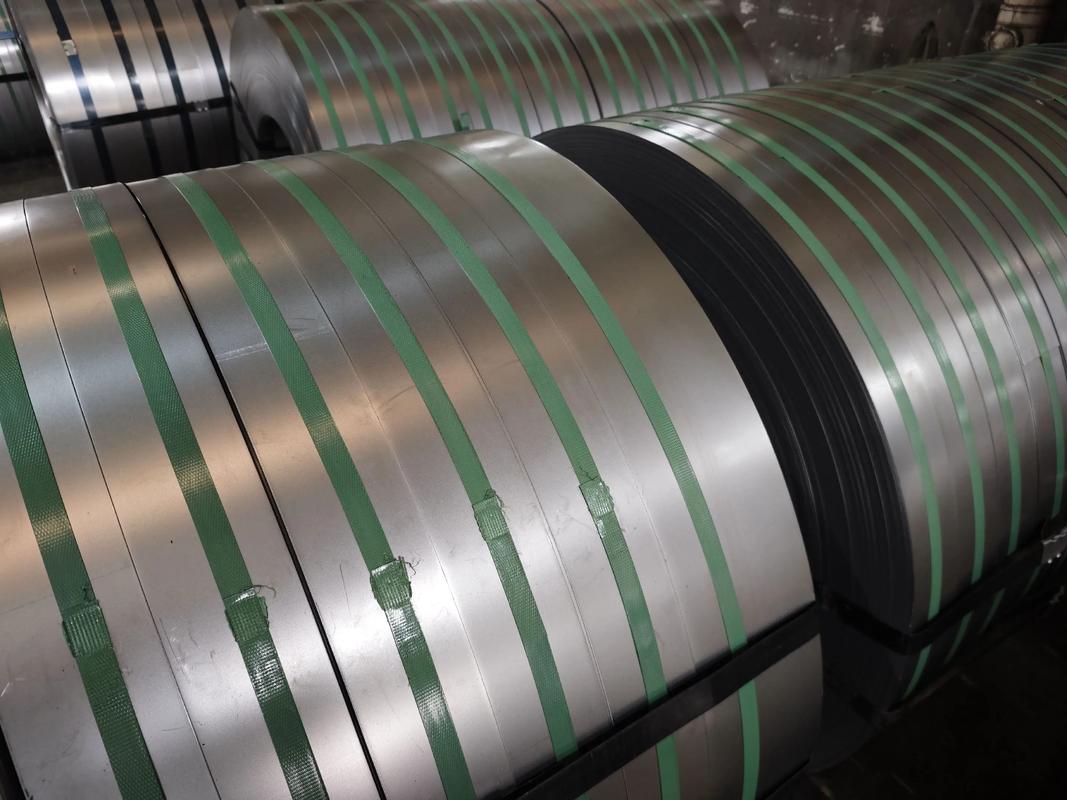
Working in steel as long as we have, one pattern stands out: when customers inquire about hot rolled stainless steel coils, the questions that come thickest are grade, thickness, width, and tolerances-all fair, all checked item by item. But when the conversation turns to surface condition, it tends to stop short: "Pickled white finish is fine," "Just follow the standard." As if No.1 surface were something that doesn't warrant close scrutiny, since it's going to be processed further anyway.
That's actually a significant blind spot. The surface condition of a hot-rolled coil directly sets the starting point for every downstream process. Incomplete pickling leaves oxide scale behind that gets pressed into the substrate during subsequent cold rolling or stamping, turning into pits that can never be removed. Over-pickling buries the risk of intergranular corrosion instead. After years of making hot-rolled stainless coils here at MIDAS, we've come to feel this is a subject worth sitting down and discussing properly.
Pickling isn't just "giving it a wash"
A hot-rolled stainless surface carries a layer of oxide scale-complex in composition, with chromium oxides, iron oxides, and a chromium-depleted zone in the base metal beneath. The purpose of pickling is to remove that layer without harming the good steel underneath. Sounds simple; doing it is another matter.
Acid concentration, temperature, line speed, pickling time-every parameter is a tug-of-war with "just right." Under-pickle, and oxide scale remains; the surface comes out dark and mottled, and the downstream user receives a coil that simply "looks wrong." Over-pickle, and the grain boundaries get attacked; the surface may be white, but corrosion resistance has already been compromised-something the customer may not see at the time, only a year or so down the road. Our pickling line at MIDAS runs on the conservative side when it comes to parameter control-we'd rather go a little slower than let any coil's surface condition drift outside a narrow band. That may sound like boilerplate, but anyone who works with hot-rolled coils knows: consistency is harder than pushing the limit.
Surface consistency: what samples can't show you
Here's something we've always found interesting. When customers take a sample, they're usually looking at that one small piece of surface-is it white, is it even. But what really determines the user experience is consistency from head to tail of the entire coil. Is there a color difference between the ends and the middle? Is the pickling degree uniform at the edges versus the center? Can two coils be used side by side without sorting?
None of this shows up on a sample, and none of it can be written into a test report. But the people downstream doing slitting, cut-to-length, or stamping know the moment they put their hands on it. A hot-rolled coil with good surface consistency can go straight from slitting into the production line-no piece-by-piece sorting, no downgrading. A coil with poor consistency means an operator has to inspect sheet after sheet, burning efficiency entirely on sorting. Our quality-control logic at MIDAS, at the coiling and pickling stages, is this: we'd rather cut away more of the transition section at the head and tail than let a customer receive material they have to "sort again themselves."
A steelmaker's personal view
Our personal view is that the most awkward thing about the hot-rolled stainless coil category is this: it's always an intermediate product. Customers buy it to make something else. Whether it's good ultimately shows up in the yield of their downstream product, not in its own test report. So the product logic in this trade shouldn't be "meets standard, done"-it should be "the next person to use it doesn't have to worry an extra time about the surface."
Our MIDAS warehouse keeps stock of several mainstream grades and sizes-304, 316L, the grades that move regularly-and we'll cut a sample whenever a customer asks. But we usually suggest: look at the sample, yes, but ideally also come to the plant and look at a full coil. One sample can't represent an entire coil, but the condition of a coil from head to tail can tell you a lot of things a sample can't. That may sound like we're talking a customer out of a quick decision, but we figure it's more honest to let someone see clearly before they buy than to explain afterward.
Straight talk for procurement and processing customers
Our MIDAS hot-rolled stainless coils cover common austenitic grades including 304, 304L, and 316L, with thickness and width customized to the customer's equipment parameters. Surface condition is primarily pickled white finish (No.1), and specific surface requirements can be discussed based on downstream processing needs. Slitting, cut-to-length, and edge trimming can be arranged as a package to reduce the number of hand-offs in between. Samples and full-coil inspections can both be scheduled; lead times and minimum order quantities are negotiated per project.
A hot-rolled coil is never the star of the show. But whether a downstream product can skip a sorting step or avoid a downgrade sometimes comes down to that "invisible skin." Here at MIDAS, we're willing to put extra effort into this thing that few people care to discuss in detail-because whether it's worth it isn't measured by the price of one coil, but by whether someone, somewhere, saved an entire batch's worth of sorting time because of it.